OUR HISTORY - PAST, PRESENT and FUTURE
From foundation to the present days
The secularization that gradually spread throughout Hungarian society beginning in the 19th century meant that the ecclesiastical university founded in Nagyszombat in 1635 by Cardinal Péter Pázmány, which had come under state (royal) administration during the 1770s, could no longer be operated entirely in the Catholic spirit. Consequently, the idea arose time and again to establish a Catholic university either by separating the Faculty of Theology or by founding a new institution independent of it.
In fact, during the 19th century, Catholic universities were established in several countries in Western Europe and in America for precisely the same reason. These institutions should not be confused with the universities founded in the Middle Ages in countries that were committed to Christianity even at the state and societal levels. It was precisely the breakdown of the medieval unity of religion, state, and society that made this new type of university—the Catholic university—necessary. However, attempts to establish Catholic universities in Hungary remained unsuccessful until the final decade of the 20th century. The ultimate reason for this was, on the one hand, that the complete legal separation of the Kingdom of Hungary and the Catholic Church never took place, so at least the Catholic identity of theological education seemed defensible within a state institution even without a concordat. On the other hand, between 1948 and 1989, the official ideology did not allow for the development of new Catholic higher education.
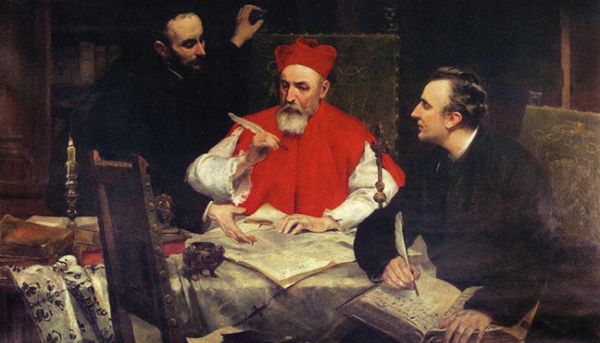
During 1989, the government proposed reintegrating the Pázmány Péter Roman Catholic Theological Academy into Eötvös Loránd University. However, the separation of the Faculty of Theology from the state university in Hungary took place differently than, for example, in neighboring Czechoslovakia. In 1950, Decree No. 23/1950 of the Presidential Council of the Hungarian People’s Republic stipulated that theological faculties must be separated from the universities and transferred to the respective churches. Thus, the Hungarian Catholic Bishops’ Conference reorganized the Faculty of Theology, which had been separated from the university, under the name Roman Catholic Central Academy of Theology. The state recognized this institution as a public academy and, within its own legal framework, granted it the authority to confer academic degrees. Since, therefore, the Faculty of Theology in Budapest remained a purely ecclesiastical institution. Even in 1989 the state could not merge it with a state university through a unilateral measure, as this concerned a faculty of theology, the consent of the Holy See would have been required. However, this consent was never granted.
Since diplomatic relations between the Republic of Hungary and the Holy See were not restored until early 1990 (on February 9), Archbishop Francesco Colasuonno (later Cardinal) still represented the Holy See throughout the region in 1989. It was he who proposed that the existing ecclesiastical Faculty of Theology should be transformed into a Catholic university by establishing new faculties. This would allow theology and the Church to emerge from intellectual isolation, enabling the teaching of secular sciences in a Catholic spirit, while the institution would retain its autonomy and ecclesiastical character. However, the legal conditions for this were still lacking in 1989.
Section 60(3) of the Constitution, as amended on October 23, 1989 (Act XXXI of 1989), explicitly stated the separation of the state and the Church. Thus, it seemed likely that theological education, as well as religious education would not take place in state institutions in the future. The legal possibility for establishing non-state universities was created by Act XXIII of 1990, amending Act I of 1985 on Education, primarily through its Section 5. Government Decree No. 36/1990 (IX.12.) established rules regarding the fundamental conditions for the establishment of non-state higher education institutions. In the meantime, National Assembly Resolution No. 30/1990 (March 21) expressly recognized the Pázmány Péter Roman Catholic Theological Academy in Budapest as a university in its annex. This made it formally possible for a Catholic university to be established through the expansion of the existing institution with university status.
Meanwhile, the issue of funding also appeared to be resolved in principle. Specifically, Section 19(1) of Act IV of 1990 guaranteed church-run educational institutions the same level of budgetary support as that provided to similar state institutions. All these conditions, and the expectation that they would materialize, led to the initiation of preparations for the Catholic University around the turn of 1989–90, first at the discussion level and then through the establishment of a foundation. Since, in the meantime, the idea of a Catholic university had also been raised among intellectual circles in certain provincial towns (Esztergom, Eger), those working on these initiatives were also invited to join the Foundation’s board of trustees to avoid a fragmentation of efforts. Meanwhile, on August 15, 1990, the apostolic constitution Ex corde Ecclesiae on Catholic universities was issued. This allows other official ecclesiastical legal entities besides the Holy See, such as episcopal conferences or religious orders, to establish Catholic universities.
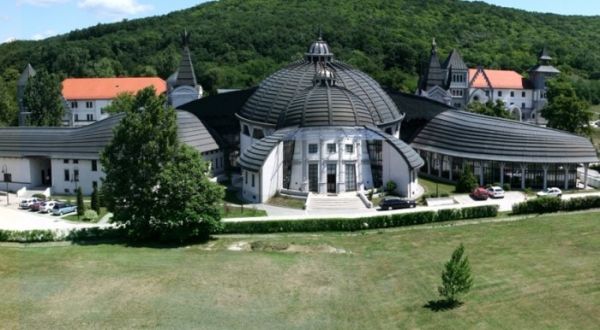
Choosing a location initially seemed like a difficult task, as Act XXXII of 1991 on the settlement of ownership issues regarding former church properties had only been enacted in the summer of 1991. For this reason, the organizers turned their attention to former Soviet military facilities, which had fallen into disuse around that time. First, the possibility of applying for a former Soviet barracks in Pestszentlőrinc—then known as Vörösfény Street—was raised, and then attention shifted to the former Soviet military facility in Piliscsaba, as the local government leaders there were eager to support the conversion of the barrack complex, situated in a favorable natural environment, for educational purposes. Assessing the suitability of the site was no easy task. The author of these lines, along with several others, was able to examine the condition of the abandoned barracks. Mons. Juliusz Janusz, then counselor at the Nunciature in Budapest (currently Apostolic Nuncio to Mozambique), participated in the visit. Despite the property’s relative distance from the center of Budapest and its rather dilapidated condition, given the beauty of the landscape and the opportunities offered by the location, he gladly encouraged the organizers to accept the site. Thus began the preparations for the university in Piliscsaba, within the territory of the Diocese of Székesfehérvár. The Foundation took over the property from the government in the fall of 1991 and then offered it to the Episcopal Conference for the purpose of developing university educational facilities.
After carefully reviewing the situation and weighing the available options, the Hungarian Catholic Bishops’ Conference decided in December 1991 that the time was ripe to take official action and turned to the Holy See to seek preliminary authorization for the establishment of the university. After receiving a positive response (the approval of the Congregation for Catholic Education, dated January 24, 1992, Prot. No. 223/91/9), the Hungarian Catholic Bishops’ Conference, by its decree No. 46/1992 dated January 30, 1992, established a Faculty of Humanities as a new university faculty alongside the Roman Catholic Faculty of Theology operating in Budapest, and declared that the institution had thus become a Catholic university. It was named Pázmány Péter Catholic University.
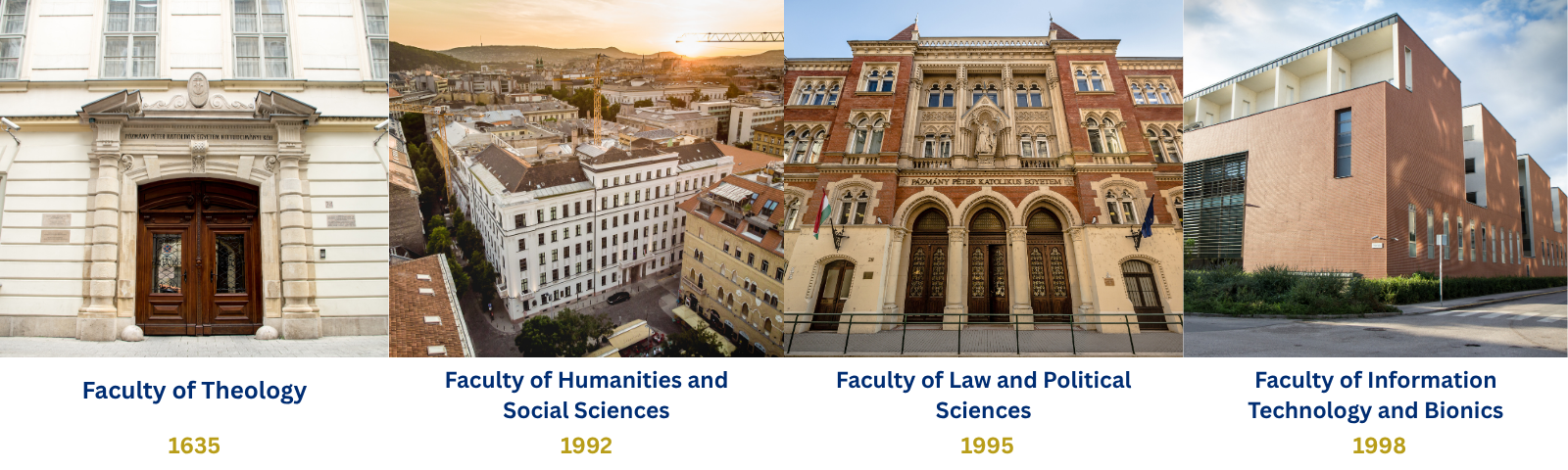
At the time of its founding, it consisted of two faculties: the Faculty of Theology and the Faculty of Humanities. On October 4, 1992, Cardinal Pio Laghi, Prefect of the Congregation for Catholic Education, opened the new university’s first academic year with a Mass at the University Church in Budapest. The University was recognized in this form (under the name Pázmány Péter Catholic University) by the National Assembly through Resolution No. 2/1993 (II.4.) OGY. Soon thereafter, the Faculty of Humanities also received explicit state recognition as a university faculty.
Initially, classes at the new faculty were held temporarily in the Sisters of Mercy’s building on Ménesi út in Budapest, but in the meantime, renovation work on the barracks property in Piliscsaba also began. The first academic year of the Faculty of Humanities, during which classes were held in Piliscsaba, began in the fall of 1994, when the new university campus was inaugurated with a Mass attended by members of the Episcopal Conference, the Apostolic Nuncio, and other distinguished figures.
The University’s Faculty of Law and Political Sciences was founded by the Episcopal Conference on April 3, 1995. State recognition of the Faculty soon followed. From the very beginning, the new faculty considered it a priority mission to ensure that students attending the school would not merely encounter the detailed rules and procedural practices of individual traditional fields during their studies. They should also be able to choose from courses that primarily offer an introduction to the moral foundations of the legal system. These are fundamental principles and values that, on the one hand, help them navigate the rapidly changing body of law, and on the other hand, will serve as an important anchor when, as practicing lawyers or administrative professionals, they face difficult situations, legal loopholes, or dilemmas.
In June 1998, the Bishops’ Conference established the Faculty of Information Technology at the University, which was recognized as a university faculty by the state authorities in 2001. In 1996, the Holy See established a Postgraduate Institute of Canon Law with faculty status at the University, by decision No. 975/96 of the Congregation for Catholic Education, dated November 30, 1996. The same Congregation granted the University as a whole the status of a pontifical institution by its decree dated March 25, 1999.
The issuance of the charter means that the Holy See considers the institution its own and has approved its statutes. The Hungarian Catholic Bishops’ Conference remains the University’s governing body. This highest level of recognition reflects the fact that the institution has developed significantly in recent years. Given the quality of its faculty, the academic excellence of its departments, and the continued financial stability of its operations, the Holy See is confident that the university will function in accordance with the rules, in an academic spirit, and in the Catholic tradition. The decree also notes that, under the guidance of the Church’s Magisterium, the university is able to represent scholarship and the Gospel throughout the region.
Since the Holy See’s founding decree, the University has continued to develop. Its institutional development plan has been approved by both the Bishops’ Conference and the relevant ministry. Various religious communities support the institution’s operations through their colleges and participation in campus ministry. A fruitful working relationship has also developed between the University and the surrounding church-affiliated educational institutions.
Carrying our past, looking to the future
Pázmány Péter Catholic University is one of Hungary’s most prestigious and prominent universities. Over the past few years, the multiple campuses—in Budapest, Piliscsaba, and Esztergom—have significantly hindered the institution’s efficient development in line with 21st-century needs; therefore, a new development concept needed to be prepared as soon as possible to establish a consolidated campus.
The exploration of this possibility began with Government Resolution 1213/2018. (IV. 6.), but the decision-making process was only concluded with the adoption of Act XVI of 2020 on the free transfer of assets to the Hungarian Catholic Bishops’ Conference for the purpose of facilitating the educational tasks performed by Pázmány Péter Catholic University. The National Assembly designated the area for the campus expansion through this law, thus including Pollack Mihály Square 4-6 (former Esterházy Palace), 8 and 10 (former Károlyi Palace), 5–7 Bródy Sándor Street, and 25/A, 25/B, and 27 Szentkirályi Street.
The development and future operation of the new, unified campus—in addition to enabling significantly more sustainable and efficient operations than before, as planned— is a strategic component of the goal to make the University’s educational, research, and scientific activities more effective in the future—both domestically and internationally—through more efficient utilization of internal collaboration opportunities.
The University’s expansion of its Budapest real estate is also driven by innovation challenges, which we are addressing by establishing laboratories, IT and technical research centers, a modern university library, and associated reading rooms. The preliminary design program also identifies a need for housing capacity for several hundred students in specialized dormitories. The campus is also planned to include a sports field, which is exceptionally unique for a downtown location; as a result, the local community will be able to use it, and its utilization rate will be correspondingly high. Another goal is to revitalize the university’s musical life, so the new facility will also provide opportunities to host concerts and performances.
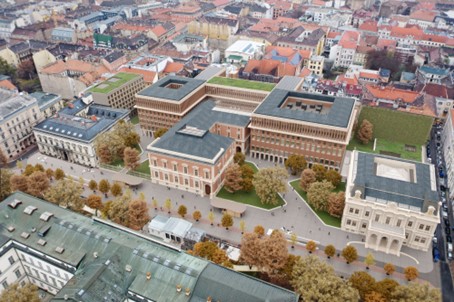
The first major component of the new Pázmány Budapest Campus project is the construction of a new complex of educational buildings on the L-shaped site located between 26 Szentkirályi Street and 15 Bródy Sándor Street. The demolition of some of the existing buildings at 26 Szentkirályi Street will create a space that can be utilized more effectively for educational purposes. During the project’s planning, the protection of the immediate environment’s characteristics and its historical heritage values were both key considerations. The Planning Council of the Józsefváros Local Government supported the architectural plan presented in August 2020, rating it as excellent from an urban landscape perspective. Since then, the permit application has also been submitted. The project’s primary goal remains to reduce the university’s geographical fragmentation and to create a campus that meets today’s requirements and blends seamlessly into its surroundings, thereby enriching both Józsefváros and its immediate environment in the future.
The new university campus will welcome faculty and students with infrastructure and spatial planning designed to meet the needs of the 21st century. However, the project is not merely a renovation of buildings but also a significant urban development initiative. Beyond serving high-quality university education, the spaces and buildings will preserve historical and architectural values in a fitting manner, creating a livable and high-quality environment; the university’s inner garden will be open to the public during daytime hours under agreed-upon conditions.